The Top 5 Reasons Why Companies Fail

Over the last decade I’ve been in a number of different roles in Growth and Marketing, across different sizes and types of companies. A recurring theme that I have found which sets the culture and performance of a company apart from others is how leadership sets a shared goal across all departments and is laser-focused on achieving it.
In this first of a 4-part blog post I'll look at the reasons why teams are prevented from achieving their growth goals and dig into how 3 of the reasons are actually quite controllable.
While it is difficult to overcome challenges w/out the right team or to test into different pricing models, I find that 3 of the top 5 reasons can be remedied with better focus on executing towards a goal.
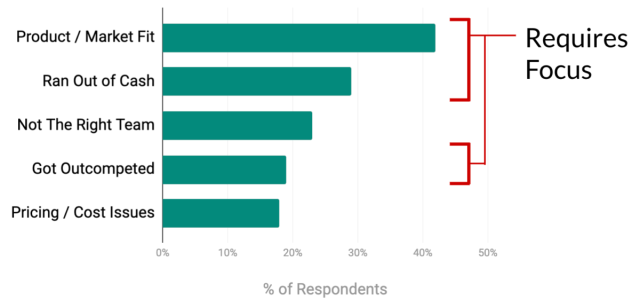
"The Top 20 Reasons Startups Fail" - CB Insights Study
With better focus on iterating on a product towards growth, teams achieve/product market fit much faster, which enables them to get external or internal funding/resourcing and outcompete others in the space.
But what is the goal really?
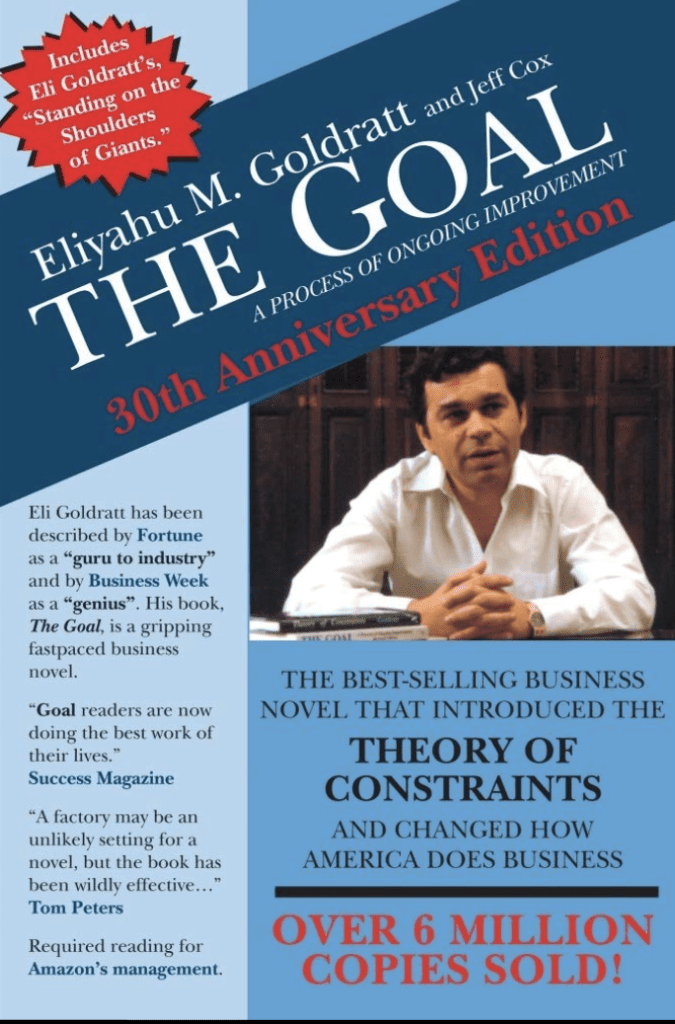
In the book "The Goal" by Eliyahu M. Goldratt, a required read for Amazon C-suite execs, Eliyahu conveys a story about a factory in the industrial era, in which, when you look at any individual part, the metrics show that it extremely optimized, but when looking at the throughput of the whole factory it is actually unprofitable and inefficient.
The reason behind this is that they aren’t optimizing the factory’s metrics across the system as a whole.
Eliyahu argues that the goal of any company simply is to make money, and so all departments of the factory really should be optimizing towards that and any activities that aren’t driving that goal should be discontinued.
The goal = make money $$
It’s easy to see why this is a required read for Execs at Amazon, a logistics powerhouse which, even at their scale has few equals when it comes to efficiency and their ability to execute on initiatives that drive revenue.
In the next part in this series I'll dive into how you can leverage a Growth Model to better understand and stress-test your thinking about the optimum resourcing across your growth levers.
I help consumer subscription apps in health, wellness, and education reach their next phase of growth.
Growth notes, in your inbox
New writing on subscription growth and product-led strategy when I have something worth saying. No spam.